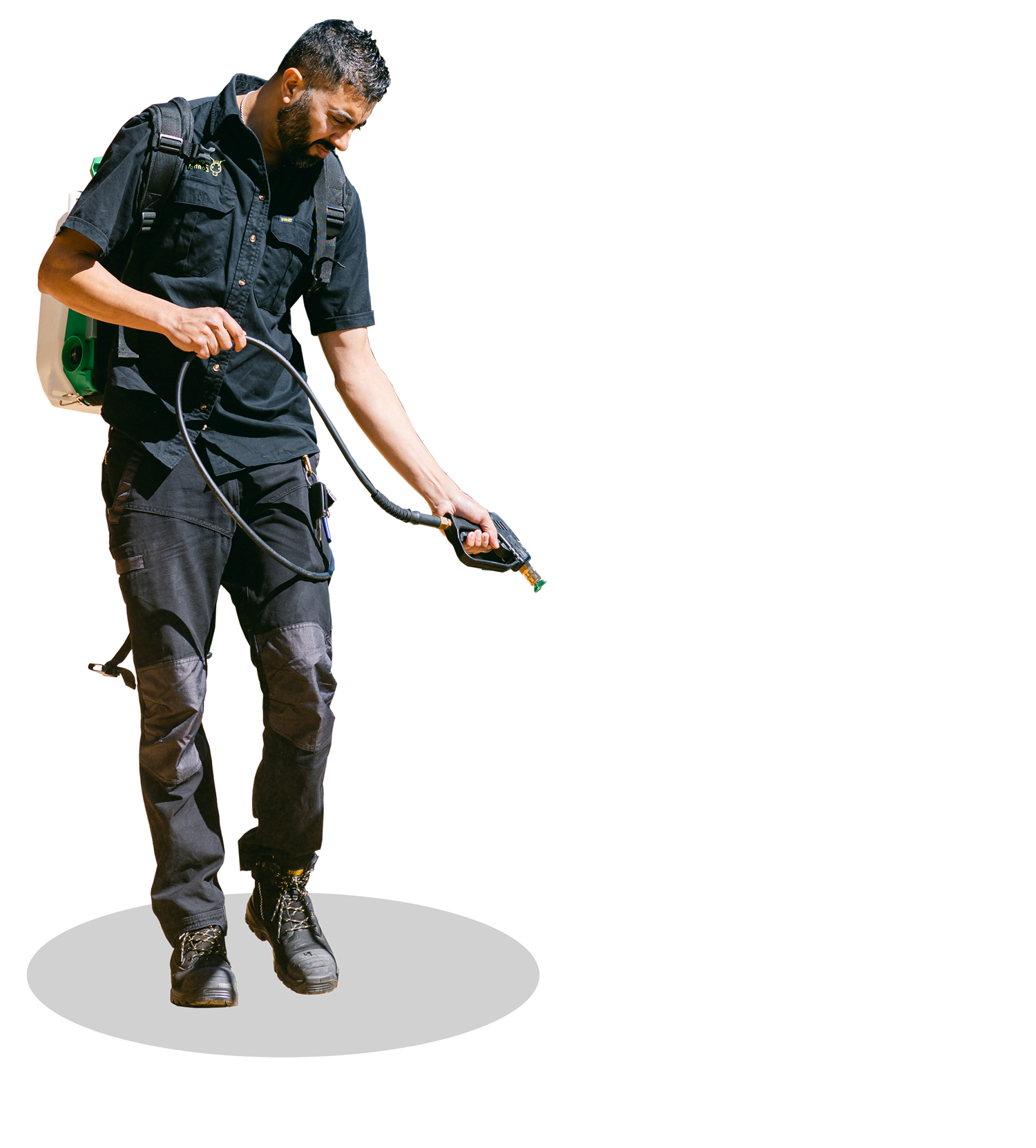

Restaurant Rodent Prevention Strategies
Rodent prevention in restaurants is about removing opportunity before rats or mice become established. Food, warmth, waste, water, deliveries and building access can all support rodent activity, so the strongest program combines exclusion, sanitation, food storage, monitoring, targeted treatment and documented follow-up. For broader business pest-management support, visit our Commercial pest control sydney home page.

Brands and organisations that trust our team
Our commercial pest-management work spans hospitality, food service, education, property and other complex business environments across Sydney.


Customer Reviews in Sydney
See what Sydney businesses and customers say about their experience with our commercial pest-control services.



Restaurants bring together almost everything rats and mice need: food, water, warmth, harbourage and regular movement of goods. Kitchens may operate late into the night, deliveries arrive through loading doors, food is stored in dry stores and cool rooms, and waste leaves through a separate back-of-house route.
Rodent prevention therefore needs to follow the entire food and waste pathway through the business. A mouse caught near a kitchen does not automatically mean the problem started there. The actual entry point may be a rear door, shared service corridor, ceiling void, wall penetration, laneway or adjoining tenancy.
The strongest restaurant programs focus on denying access, reducing available food and shelter, detecting activity early and responding before a small rodent issue becomes established.
For the wider food-safety framework, see our food safety pest management for restaurants guide.
Six restaurant zones that can drive rodent activity
Rodent prevention works best when the inspection follows access, food, water, waste and harbourage through the whole venue.
Rear doors & deliveries
Damaged door seals, open receiving doors, shared laneways and frequent deliveries create some of the most common opportunities for rodents to enter food businesses.
Dry stores
Cardboard, shelving, bulk ingredients and quiet storage areas can provide both food and concealed harbourage if stock is poorly rotated or difficult to inspect.
Kitchens & equipment
Food residue beneath cooking equipment, refrigerators and preparation benches can support rodents even when visible floor areas appear clean.
Ceilings & services
Pipework, cable penetrations, ceiling voids and adjoining wall cavities can allow rodents to travel through the building while remaining largely unseen.
Waste areas
Food waste, leaking bags, damaged bin lids and dirty bin pads can create sustained rodent pressure immediately outside the restaurant.
Neighbouring premises
Shared walls, loading areas, food courts, laneways and nearby waste sources can allow rodents to move between businesses even when one venue is well maintained.
A practical 12-point rodent prevention program
Long-term control comes from reducing access and resources first, then using monitoring and targeted control to identify and manage any remaining rodent pressure.
1. Inspect the entire site
Review kitchens, stores, ceilings, loading areas, rear doors, waste, service penetrations and the external perimeter. Rodent movement often connects several areas that look unrelated.
2. Seal access points
Repair door gaps, damaged seals and penetrations around pipes or cables. Exclusion is one of the most important long-term controls because it reduces the number of rodents reaching food and harbourage.
3. Protect food storage
Keep ingredients in appropriate containers, inspect damaged packaging, avoid leaving opened food exposed and maintain enough clearance for staff and technicians to inspect storage areas properly.
4. Control waste
Use sound bins with effective lids, prevent leaking food waste, clean bin pads and review collection frequency when waste is accumulating faster than it is removed.
5. Clean hidden food residue
Cleaning should reach beneath and behind refrigerators, cook lines, shelving and fixed equipment. Small amounts of grease and food debris can support rodent activity out of sight.
6. Inspect incoming goods
Check deliveries and packaging for gnawing, droppings, contamination or pest evidence before goods are moved into long-term storage.
7. Use strategic monitoring
Place appropriate monitoring or control devices around likely rodent routes and high-risk zones so activity can be detected early and compared over time.
8. Record every sighting
Staff should record the exact location, time and circumstances. A single vague note such as “mouse seen in restaurant” is much less useful than a precise sighting map.
9. Investigate ceilings & services
Scratching sounds, droppings or repeated sightings near the same wall may indicate movement through ceilings, risers or service penetrations rather than activity only at floor level.
10. Use targeted control
Traps, secure baiting or other controls should be selected according to the pest, location, current product label and food-safety requirements. The control method should support the wider prevention program, not replace it.
11. Track corrective actions
Maintenance, cleaning and waste issues should be assigned to the responsible person and closed out. Repeating the same recommendation each month does not reduce rodent risk.
12. Verify the result
Review monitoring, new sightings and evidence at follow-up. Persistent activity should trigger further source investigation and proofing rather than automatic repetition of the same treatment.
Exclude. Remove food. Monitor. Respond fast.
A restaurant can use sophisticated rodent-control devices and still struggle if doors remain open, food is accessible or waste is unmanaged. The fundamentals need to work together.
Restaurant rodent prevention becomes much easier when food and waste are managed so rodents cannot access them. Dry stores should be organised so stock can be inspected, damaged packaging can be identified quickly and floor edges remain visible.
Food spilled during deliveries or preparation should not remain beneath shelving or equipment. Open ingredients and partially used products need appropriate protection, while old stock and excess cardboard should not build up into undisturbed harbourage.
Waste is equally important. A well-sealed restaurant with overflowing external bins can still experience intense rodent pressure around rear doors. Bins should close properly, the surrounding area should be cleaned and collection frequency should match the volume generated by the business.
For broader kitchen pest controls, see our commercial kitchen pest control services page.
Good results depend on daily venue controls
Professional rodent control works best when restaurant management and the pest-management provider each own the actions they are best placed to complete.
Restaurant management
Maintain food storage, cleaning and waste-control standards.
Repair doors, gaps, plumbing or building defects identified during inspections.
Record rodent sightings accurately and notify the responsible manager promptly.
Keep delivery and storage areas accessible for inspection.
Complete corrective actions rather than allowing recurring conditions to remain.
Pest-management program
Inspect the full site and identify likely access and movement routes.
Map monitoring and control points according to risk.
Use appropriate traps, secure stations or other controls where justified.
Report pest evidence and proofing recommendations clearly.
Verify results at follow-up and investigate persistent activity further.
Protect food while controlling the rodent source
Rodent management in a restaurant must protect food from contamination while ensuring pest-control devices and treatments are selected and positioned appropriately for the food environment.
When rodent evidence is found
Identify the exact location and extent of the activity.
Inspect nearby food, packaging and food-contact areas for contamination.
Protect or discard affected food according to the restaurant's food-safety procedures.
Trace likely entry routes, nesting areas and food sources.
Increase monitoring and follow-up until activity is resolved.
For ongoing prevention
Keep food protected and storage areas clean and inspectable.
Maintain secure waste storage and clean waste areas regularly.
Use pest-control devices in appropriate locations away from food contamination risk.
Document pest findings, treatment and corrective actions.
Review trends rather than waiting for another visible rodent.
Food Standards Australia New Zealand advises food businesses to keep food safe and protected from pests and to take practicable measures to prevent pests entering or living in food premises. See the official FSANZ guidance on controlling pests.
From one sighting to a managed prevention program
The best outcome is not simply catching one rodent. It is understanding why it entered, whether more activity is present and what needs to change so the same route does not remain available.

Inspect & diagnose
Confirm rodent evidence, likely species, entry points, food sources, harbourage and movement routes throughout the restaurant and external areas.
Map risk & monitoring
Identify priority zones around kitchens, stores, ceilings, loading areas, doors, waste and neighbouring pressure, then establish appropriate monitoring points.
Correct the conditions
Prioritise door repairs, proofing, cleaning, food storage and waste actions that reduce the restaurant's attractiveness and accessibility to rodents.
Apply targeted controls
Use traps, secure baiting or other control methods according to the evidence, site conditions, food-safety requirements and current label directions.
Verify & report
Review monitoring and new sightings, confirm corrective actions and adjust the program if rodent activity persists or shifts to another area.
Restaurant staff are often the first people to notice rodent evidence because they work across opening, service and closing periods. A scratching sound after the kitchen becomes quiet, a damaged packet in dry storage or fresh droppings behind equipment can provide valuable information before a rodent is seen directly.
Staff should know where to report sightings, what information to include and which food or area needs to be protected immediately. Photos and exact locations can help the technician focus the investigation and compare activity across visits.
Cleaning teams should also report new droppings, gnawing or nesting material rather than simply cleaning it away without recording the location. The evidence may be the clue that identifies a hidden route through a ceiling, wall or service penetration.
Restaurants operating continuously can also review our emergency pest control for 24-hour restaurants guide.
Questions restaurant operators often ask
What are the best restaurant rodent prevention strategies?
The core strategies are structural exclusion, sanitation, protected food storage, controlled waste, incoming-goods inspection, strategic monitoring, rapid response to sightings and documented follow-up. Traps or bait alone cannot compensate for open access and available food.
Where do rats and mice usually enter restaurants?
Common access routes include gaps beneath doors, loading areas, damaged seals, pipe and cable penetrations, roof or ceiling routes, service corridors and adjoining tenancies. The exact route needs to be confirmed through inspection rather than assumed.
Are rodents a food-safety issue?
Yes. Food businesses need to protect food from pests and contamination. Rodent droppings, urine, gnawing and contact with packaging can create serious food-safety and hygiene concerns that require prompt investigation and corrective action.
Should baiting be the main rodent-control method?
No. Secure baiting may be useful in appropriate situations, but long-term control also depends on proofing, food storage, sanitation, waste management, monitoring and source investigation. The program should use the combination of controls best suited to the site.
How often should restaurants be checked for rodents?
The frequency should reflect pest history, venue size, operating hours, food storage, waste, surrounding rodent pressure and monitoring results. Active or higher-risk restaurants may require more frequent inspection and follow-up.
What should staff do after seeing a mouse or rat?
Record the exact location and time, protect exposed food, look for obvious contamination or access issues, notify the responsible manager and arrange prompt professional investigation. Repeated sightings should be treated as evidence of an unresolved source or movement pathway.
Need help preventing rodents in your Sydney restaurant?
Request a commercial assessment for your restaurant, café, commercial kitchen or food-service venue. We can inspect rodent activity, entry points, storage, ceilings, deliveries, waste and surrounding pest pressure, then build a practical site-specific prevention and monitoring program.