
Hospital Pest Control Regulations & Compliance Sydney
Hospital pest management needs more than a treatment schedule. It must fit the facility's infection-prevention systems, contractor controls, pesticide law, chemical-safety procedures, food-service requirements and audit documentation. This guide explains the practical compliance framework for hospitals and healthcare facilities in Sydney NSW. For broader business pest-management support, visit our Commercial pest control sydney home page.

Brands and organisations that trust our team
Our commercial programs are built around documented service, clear communication and practical site-specific pest prevention.


Customer Reviews in Sydney
See what Sydney businesses and customers say about their experience with our commercial pest-control services.


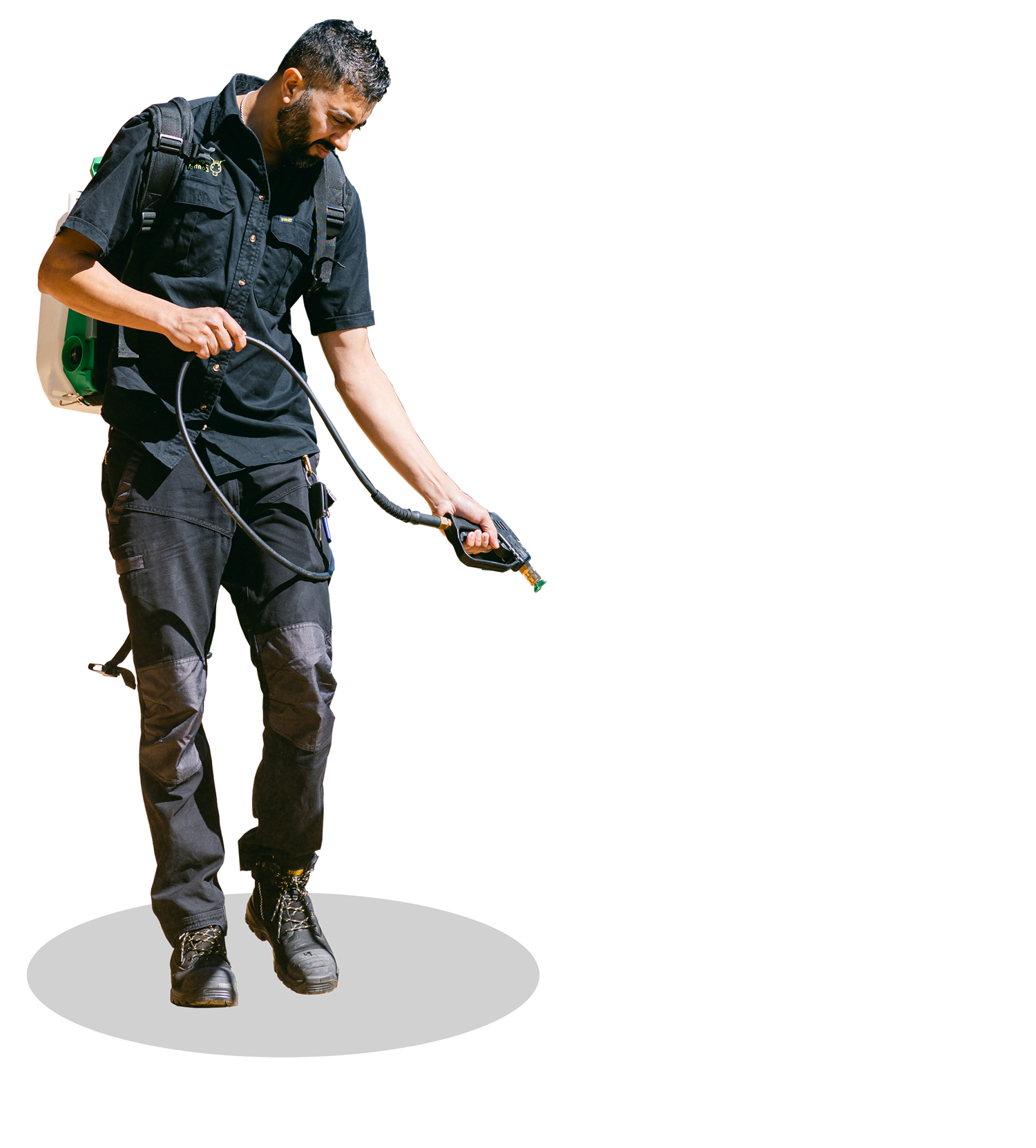
Hospital pest control in Sydney sits across several overlapping obligations. The pest contractor must comply with NSW pesticide law and product directions, while the healthcare organisation must manage infection-prevention, patient safety, contractor access, hazardous chemicals, food areas and its own clinical governance requirements.
The NSQHS Preventing and Controlling Infections Standard establishes systems for preventing and controlling infection in health service organisations. It does not operate as a pest-control manual, but a hospital pest program should support the same risk-management objective by preventing pest activity, contamination and uncontrolled pesticide exposure.
In NSW, occupational pesticide use is regulated by the NSW EPA under the Pesticides Act and the current pesticide regulation framework. The EPA also sets licensing, record-keeping and certain notification requirements. Separately, APVMA-approved label directions determine how registered pesticide products may legally be used.
That is why a compliant hospital program should connect the pest contractor with facilities, infection prevention, WHS, environmental services, food services, security and maintenance rather than operating as an isolated monthly visit.
The rules and controls that shape hospital pest management
The exact requirements depend on the hospital, the treatment and where it is carried out. These six areas form the practical compliance framework for most Sydney healthcare sites.
Healthcare infection prevention
Coordinate pest management with the hospital's infection-prevention and environmental-cleaning systems. Avoid creating contamination risks or unnecessary disruption in clinical environments.
NSW pesticide law
Use appropriately licensed personnel, comply with NSW EPA requirements, keep required occupational pesticide records and follow any notification obligations that apply to the specific treatment or location.
APVMA label compliance
The pesticide must be registered or otherwise lawfully permitted for the intended use. Directions, restraints, application method, PPE, ventilation, re-entry and other label instructions must be followed.
Work health & safety
Hazardous-chemical risks, SDS information, storage, handling, exposure controls, PPE, isolation and contractor coordination should be addressed through the facility's WHS systems.
Food-safety requirements
Hospital kitchens, food stores and catering operations must manage pests without creating a food-contamination hazard. Food, utensils and food-contact surfaces may need additional controls during treatment.
Hospital governance & records
Service reports, maps, pest trends, corrective actions, proofing recommendations, technician details and treatment records should be structured so the facility can demonstrate what was found, what was done and what remains open.
A practical 12-point compliance check
Before treatment begins, the facility and pest contractor should be able to answer these questions clearly. This checklist is particularly useful for facility managers, WHS teams, infection-control staff and procurement teams reviewing a pest-management contractor.
1. Is the technician licensed?
Verify that the person performing regulated pest-management work holds the appropriate NSW EPA licence or authorisation for the activity being carried out.
2. Is the product permitted for the use?
Check the current APVMA-approved label or applicable permit. Confirm the site, pest, application method and treatment situation are covered before use.
3. Has the treatment area been risk assessed?
Consider patients, visitors, staff, food, medication, sterile supplies, clinical equipment, ventilation, oxygen or ignition risks, environmental drains and adjacent occupied areas.
4. Is infection prevention involved where needed?
Higher-sensitivity clinical areas may require coordination with infection prevention, environmental services or the relevant clinical department before access, treatment or re-entry.
5. Are non-chemical controls prioritised?
Proofing, sanitation, source removal, trapping, monitoring and building maintenance should be used where practical so pesticide application is targeted rather than routine and indiscriminate.
6. Are treatment boundaries clear?
Define exactly where the work will occur, what must be isolated or protected, who controls access and whether adjacent rooms, corridors or air-handling systems are affected.
7. Are label controls documented?
Record relevant PPE, ventilation, surface preparation, food or utensil protection, re-entry intervals, post-treatment cleaning and any other label-specific restrictions.
8. Are notifications required?
Check whether NSW pesticide-notification rules, a public authority notification plan, hospital contractor procedures or internal patient/staff communication requirements apply to the proposed work.
9. Are pesticide records complete?
Occupational pesticide-use records must be created and retained as required by NSW EPA. Hospital records should also make it easy to trace the treatment, product, technician, area and outcome.
10. Are food-service areas protected?
Hospital kitchens, vending areas and food stores should follow food-safety controls so pest treatment does not contaminate food, utensils or food-contact surfaces.
11. Is there an incident response pathway?
The facility should know who to contact if there is a spill, unexpected exposure, odour complaint, patient concern, non-target impact or treatment deviation.
12. Is the result verified?
Follow-up should confirm whether pest activity reduced and whether maintenance, sanitation or proofing actions were completed. Repeat treatment without investigating the source is not a strong compliance system.
Licence. Label. Risk. Records. Verification.
If these five areas are weak, the hospital may have a treatment schedule but not a defensible compliance program.
The NSW EPA regulates occupational pesticide use and licensing. Before engaging a contractor, hospitals can verify licensing through the EPA's public register. The licence must be appropriate to the work being undertaken; fumigation and certain restricted pesticide activities can involve additional authorisations.
NSW EPA also requires people who use pesticides as part of their work to keep pesticide-use records. The EPA states that records must be made within 48 hours and kept for three years. In a hospital, those legal records should fit inside a broader service file that also includes the service report, pest evidence, treatment area, recommendations and follow-up.
A strong record should answer basic audit questions quickly: who attended, what product was used, where it was used, why it was used, what controls applied, what pest evidence was found and what needs to happen next.
For the broader operational structure, see our Healthcare Facility Integrated Pest Management Program.
Official references: NSW EPA licensing guidance and NSW EPA compulsory record keeping.
Registered pesticide products in Australia carry APVMA-approved directions for use. A hospital should not assume that a product commonly used in commercial buildings is automatically suitable for every clinical area, application method or pest.
The technician should check the current product label before treatment and comply with directions, restraints and precautions relevant to the site. Depending on the product, these can include application rates, permitted situations, PPE, ventilation, re-entry, food or surface protection, environmental restraints and limitations on how the product is applied.
This is especially important in hospitals because small changes in the treatment environment can change the risk profile. An external rodent station, a plant-room crack-and-crevice treatment and a treatment near an occupied clinical area are not equivalent situations.
Official reference: APVMA — Use of agvet chemicals in Australia.
Compliance means controlling pests without creating a new risk
Hospitals contain areas with very different levels of vulnerability. Treatment selection should reflect who occupies the area, what is stored there and how the space connects to clinical operations.
Before treatment
Confirm the pest, severity and exact treatment zone.
Review patient, staff and visitor occupancy.
Check medicines, sterile supplies, food and sensitive equipment.
Coordinate access with facilities and relevant clinical teams.
Review the product label, SDS and site-specific risk controls.
Confirm isolation, signage, ventilation and re-entry arrangements.
After treatment
Complete required pesticide and service records.
Ventilate or clean areas where the label or hospital procedure requires it.
Remove temporary barriers or signage only when the area is ready.
Record proofing, sanitation and maintenance actions.
Review monitoring or pest-sighting data.
Escalate persistent activity for further investigation.
Hospitals often operate commercial kitchens, food stores, vending areas, staff cafés and patient meal services. Where the hospital is operating a food business, pest management also needs to align with the Australia New Zealand Food Standards Code.
FSANZ guidance for Standard 3.2.2 states that food businesses must do everything reasonably practicable to prevent pests entering or living in food premises and must eradicate pests from the premises and vehicles used to transport food.
The practical implication is that the hospital should combine hygiene, waste control, stock management, exclusion and monitoring with carefully planned treatment. Pesticides must not create a food-contamination hazard, and exposed food, utensils and food-contact surfaces may require protection or post-treatment controls according to the product label.
For a detailed food-site framework, see our Food Processing Facility Pest Management guide.
Official reference: FSANZ — Controlling pests.
NSW pesticide notification rules are situation-specific. Public authorities have notification-plan obligations for pesticide use in outdoor public places they own or manage, and hospitals are treated as sensitive places in parts of the notification framework.
That does not mean every indoor hospital pest treatment automatically requires the same public notice. The correct approach is to check who owns or manages the site, whether the area is a public place, whether the treatment is adjacent to a sensitive place, what the current EPA notification rules require and what additional hospital procedures apply.
Hospitals may also choose to use internal notification and access controls beyond the minimum legal requirement, especially where treatment affects clinical teams, contractors, patients, visitors, food operations or ventilation systems.
Official reference: NSW EPA — Compulsory notification of pesticide use.
The pest program must fit the hospital's chemical-safety system
Where pest-control products are hazardous chemicals, treatment planning should integrate with the hospital's WHS arrangements rather than being handled only as a contractor task.
Documents to control
Current Safety Data Sheets where applicable.
Product labels and treatment instructions.
Risk assessments, SWMS or contractor documents where required.
Chemical storage and transport arrangements.
Emergency and spill response information.
Exposure controls to review
Elimination or substitution where practical.
Isolation of the treatment area.
Ventilation and engineering controls.
Appropriate PPE and technician training.
Safe re-entry and handover back to the hospital.
Official reference: Safe Work Australia — Managing risks of hazardous chemicals in the workplace.
From contractor attendance to documented assurance
The strongest hospital programs turn each service visit into evidence: evidence of inspection, evidence of risk reduction, evidence of treatment control and evidence that corrective actions were closed.

Pre-qualify the contractor
Verify licences, insurance, competencies, WHS documentation and the contractor's ability to service healthcare environments discreetly and consistently.
Map hospital risk
Classify clinical areas, kitchens, waste zones, loading docks, plant rooms, ceiling spaces, external grounds and other pest pathways by both pest pressure and operational sensitivity.
Control before chemicals
Use sanitation, exclusion, monitoring, structural repair and source removal to reduce pest pressure. Chemical treatment should be targeted and justified by the pest risk and site conditions.
Document every action
Record findings, products, locations, technician details, monitoring, recommendations and any access or re-entry controls. Assign building and cleaning tasks to the responsible teams.
Trend & verify
Review pest sightings and monitoring over time. Recurring activity should trigger root-cause investigation, not simply repeat treatment. Close corrective actions and update the site plan when risk changes.
For the broader framework behind inspections, monitoring, mapping and corrective actions, see what should be included in a commercial pest management program.
Keep the evidence an auditor or facility manager actually needs
The exact document set depends on the hospital and contract, but these records create a clear, traceable history of the pest-management program.
Service reports
Date, areas inspected, activity found, work completed, technician observations, recommendations and follow-up requirements.
Site & device maps
Current locations of monitoring devices, bait stations, insect light traps or other control points, with identifiers that match service reports.
Pesticide records
Legally required use records plus product labels, SDS and any permits or authorisations relevant to the work.
Trend reports
Activity by pest, zone and date so recurring hotspots, seasonal changes and treatment outcomes can be reviewed objectively.
Corrective actions
Proofing, sanitation, plumbing, waste, door-seal and maintenance issues with responsible person, target date and closure evidence.
Incident & escalation records
Urgent sightings, exposure concerns, spills, complaints, unusual pest events and the response taken by the contractor and hospital teams.
Questions hospital facility managers often ask
Is there one specific hospital pest control regulation in NSW?
No single rule covers every aspect of hospital pest control. Compliance is usually built across healthcare infection-prevention requirements, NSW pesticide law and EPA requirements, APVMA product labels, work health and safety controls, food-safety obligations where food is handled, and the hospital's own contractor, infection-control and facility procedures.
Do hospital pest controllers need to be licensed in NSW?
Commercial pest management work in NSW is subject to EPA licensing requirements. Hospitals should verify that the pest management technician or fumigator holds the licence appropriate to the work being performed and that restricted activities are only carried out by appropriately authorised people.
What pesticide records should be kept for hospital treatments?
NSW EPA requires occupational pesticide-use records. For hospital governance and audit purposes it is also useful to retain service reports, product names, active constituents, application areas, quantities or rates where recorded, technician details, monitoring results, corrective actions, re-entry controls, incident notes and relevant safety data sheets.
Can pesticides be applied in occupied hospital areas?
Treatment planning should be site-specific. The product label, risk assessment, occupancy, patient vulnerability, ventilation, food or medication exposure, clinical equipment, infection-control procedures and re-entry requirements all need to be considered. Prevention, monitoring, proofing and targeted methods are generally preferable to broad unnecessary application.
Do hospital kitchens have extra pest control requirements?
Yes. Where a hospital operates a food business or food-service area, food-safety requirements also apply. Standard 3.2.2 requires food businesses to take all practicable measures to prevent pests entering or living in food premises and to eradicate pests from the premises and food-transport vehicles.
What should a hospital pest control audit file contain?
A practical audit file may include the scope of service, site map and monitoring-device locations, technician licensing details, pesticide-use records, product labels and SDS, inspection reports, pest-sighting logs, trend reports, proofing and sanitation recommendations, completed corrective actions, incident records, staff notifications where required and evidence of follow-up verification.
Need an audit-ready hospital pest control program?
Request a commercial assessment for your Sydney hospital, medical centre, day surgery, aged care facility or specialist healthcare site. We can review pest risks, monitoring, proofing, treatment controls, documentation and corrective-action processes, then build a practical site-specific program.